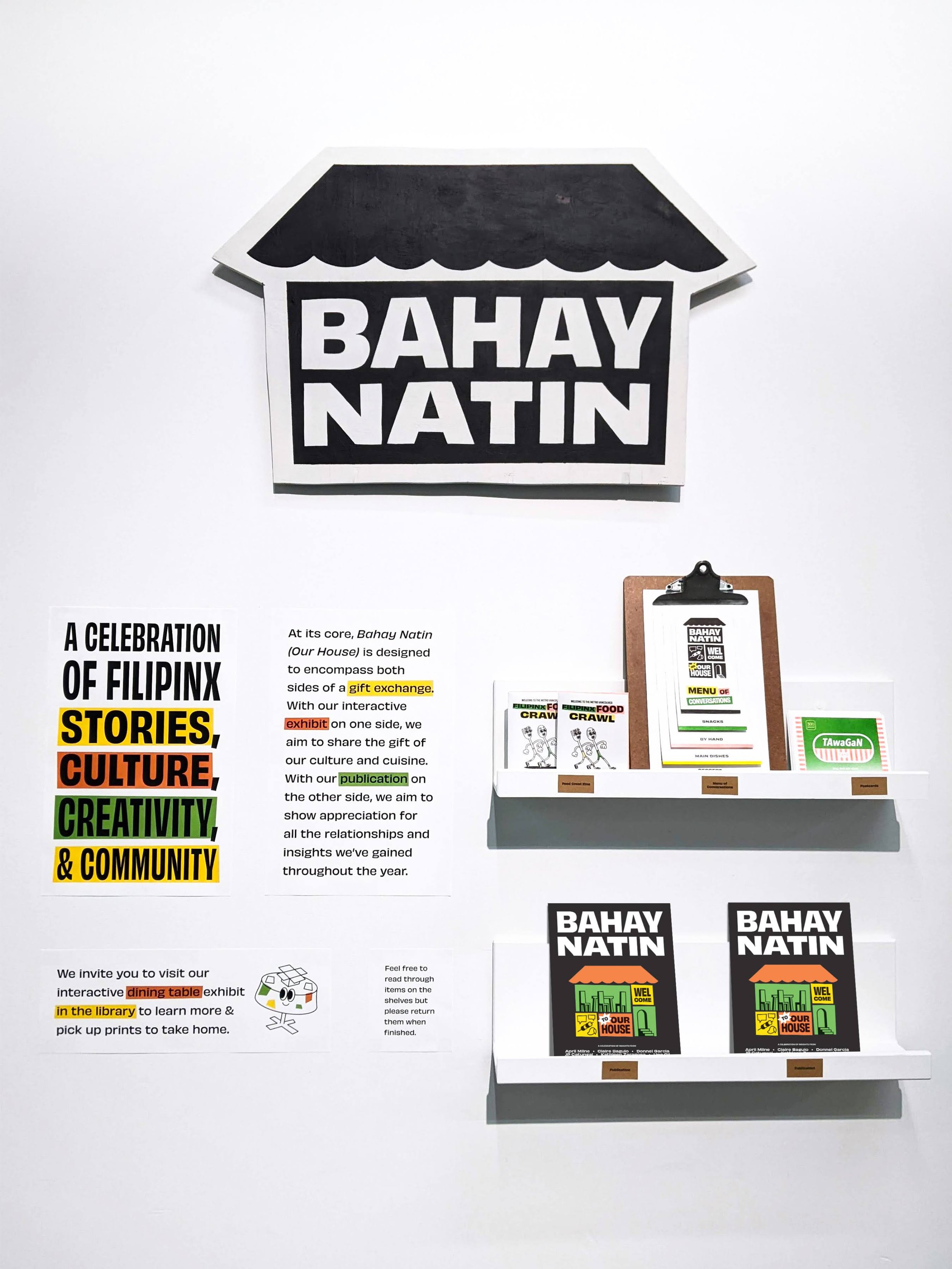
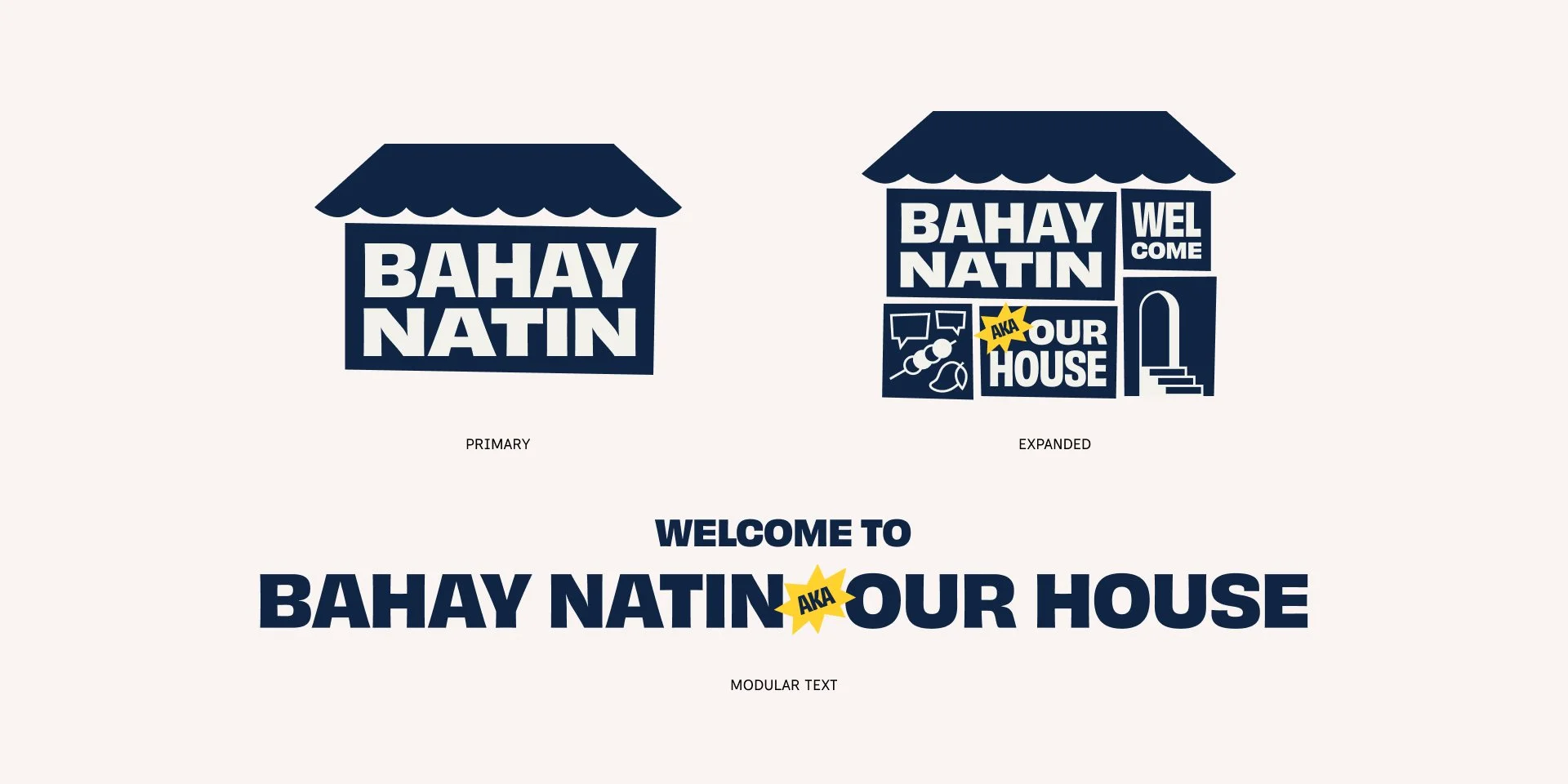
bahay natin (our House)A celebration of Filipinx stories, culture, creativity, & community
This project explores the deep connection between food and Filipinx resilience. What began as an exploration of culinary traditions evolved into a broader conversation about the impact of colonial occupation, immigration narratives, and the ongoing challenges faced by Filipinx restaurants in Vancouver’s Joyce-Collingwood neighbourhood due to rezoning plans. Food became a central avenue to engage in larger dialogues, incorporating Filipinx-Canadian creative voices and highlighting the role of cuisine in preserving culture, fostering community, and adapting to changing socio-political landscapes.
SERVICES
Brand Identity
Creative Direction
Print Design
Illustration
Exhibit Design
INTERVIEWEES
April Milne
Claire Baguio
Kathleen Zaragosa
Donnel Garcia
JP Catungal
Una Gil
COLLABORATORS
Co-designer: Kin Chua
Cultural Narratives in Every Piece
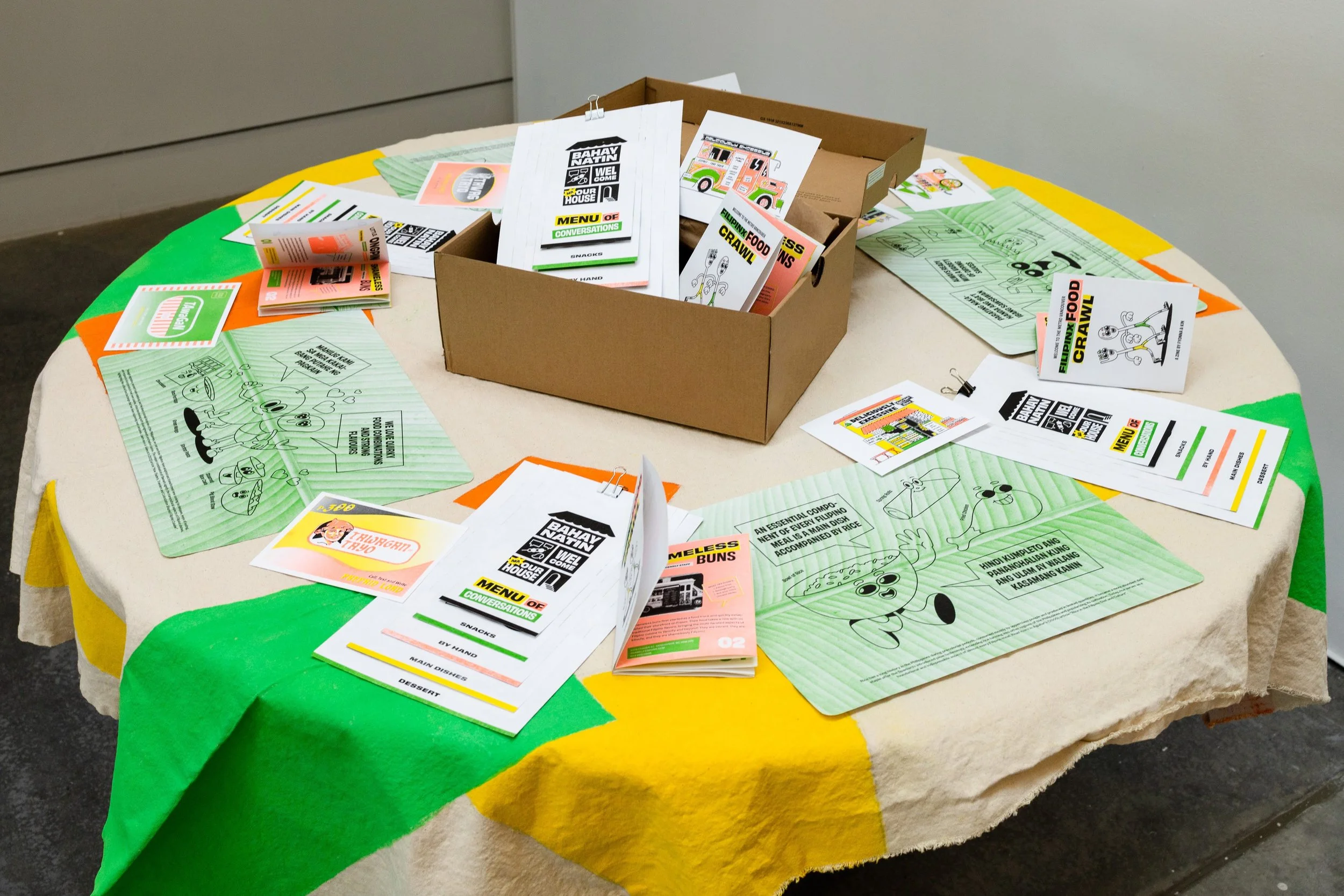
The final deliverables we created for the brand embody the spirit of Bahay Natin: a celebration of Filipinx culture, designed to serve as both educational tools and cultural expressions. From postcards addressing the complex dynamics of family separation to placemats showcasing Filipino culinary traditions, each piece is crafted to inspire conversation, deepen understanding, and honor the richness of Filipinx heritage.
Postcards



placemats

food crawl zine

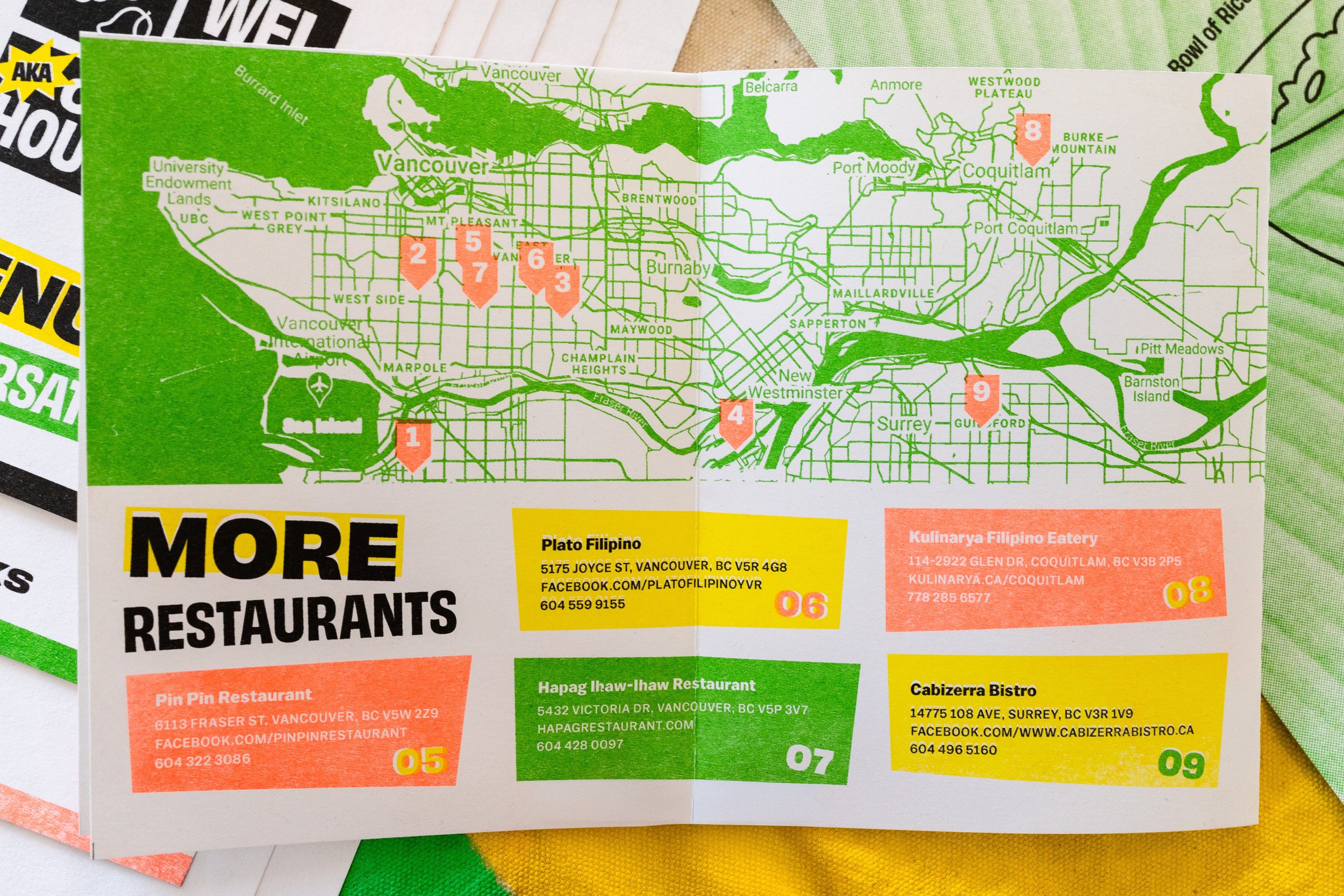
menu of conversations


Voices From Our Community
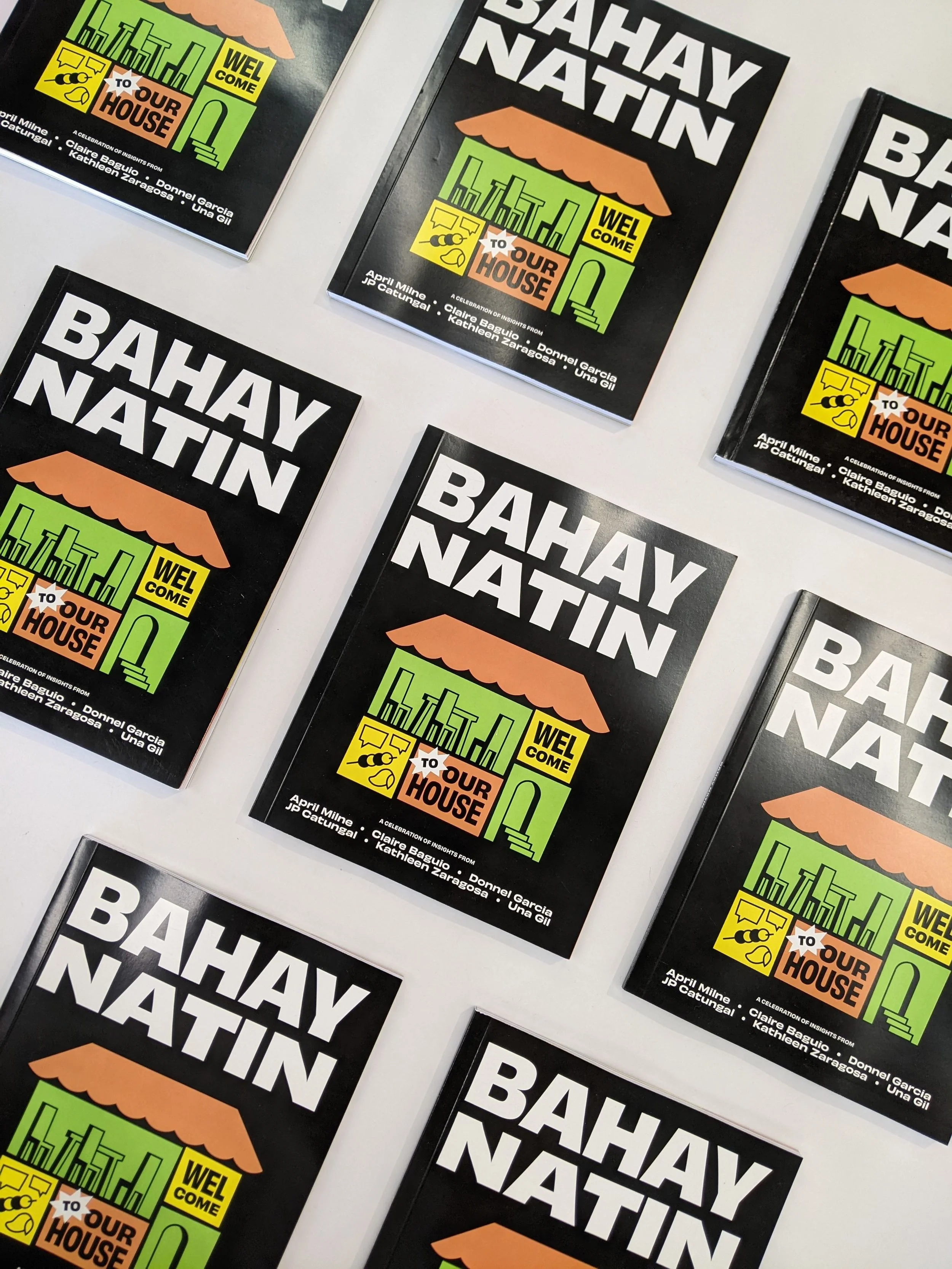
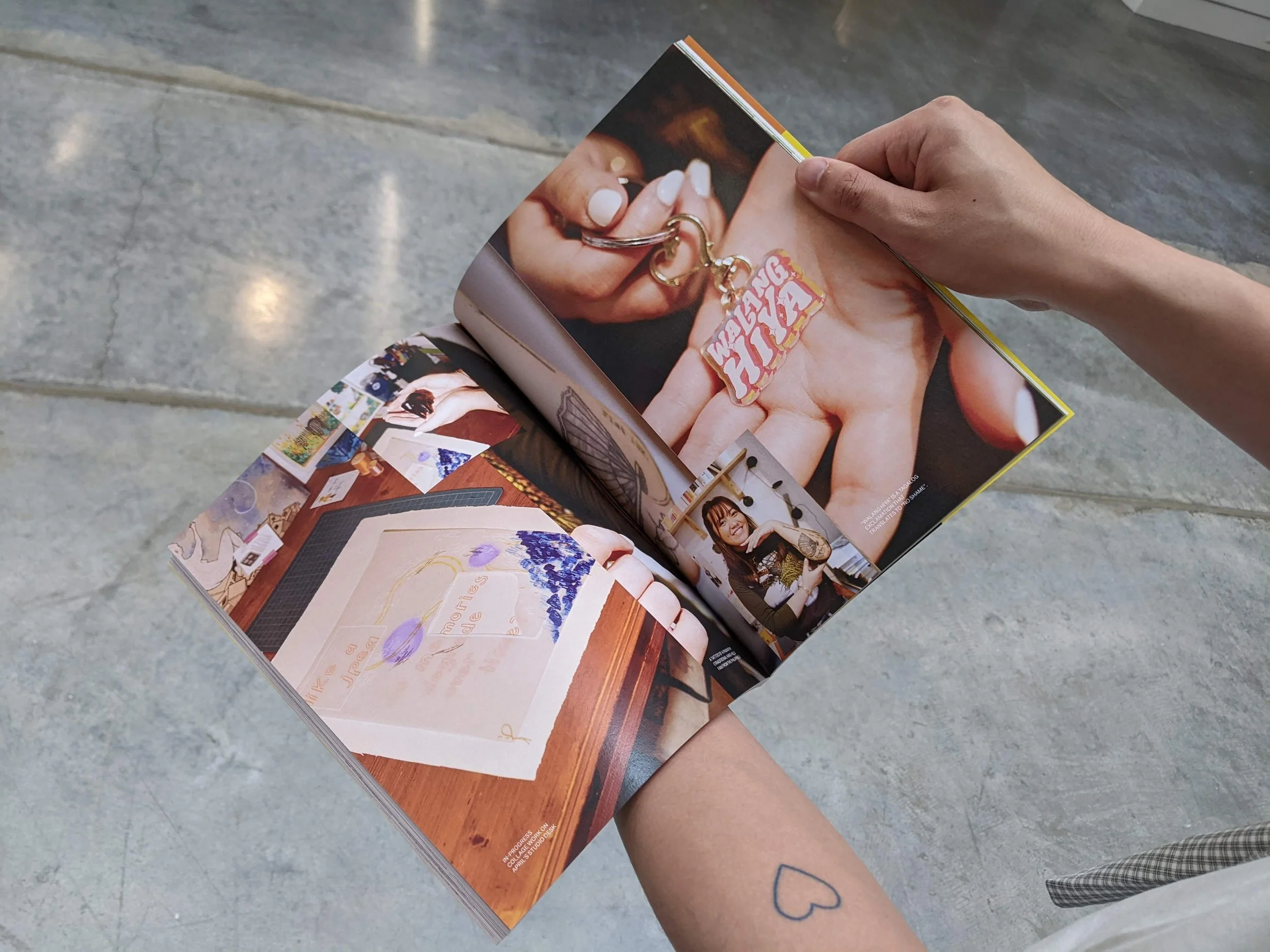
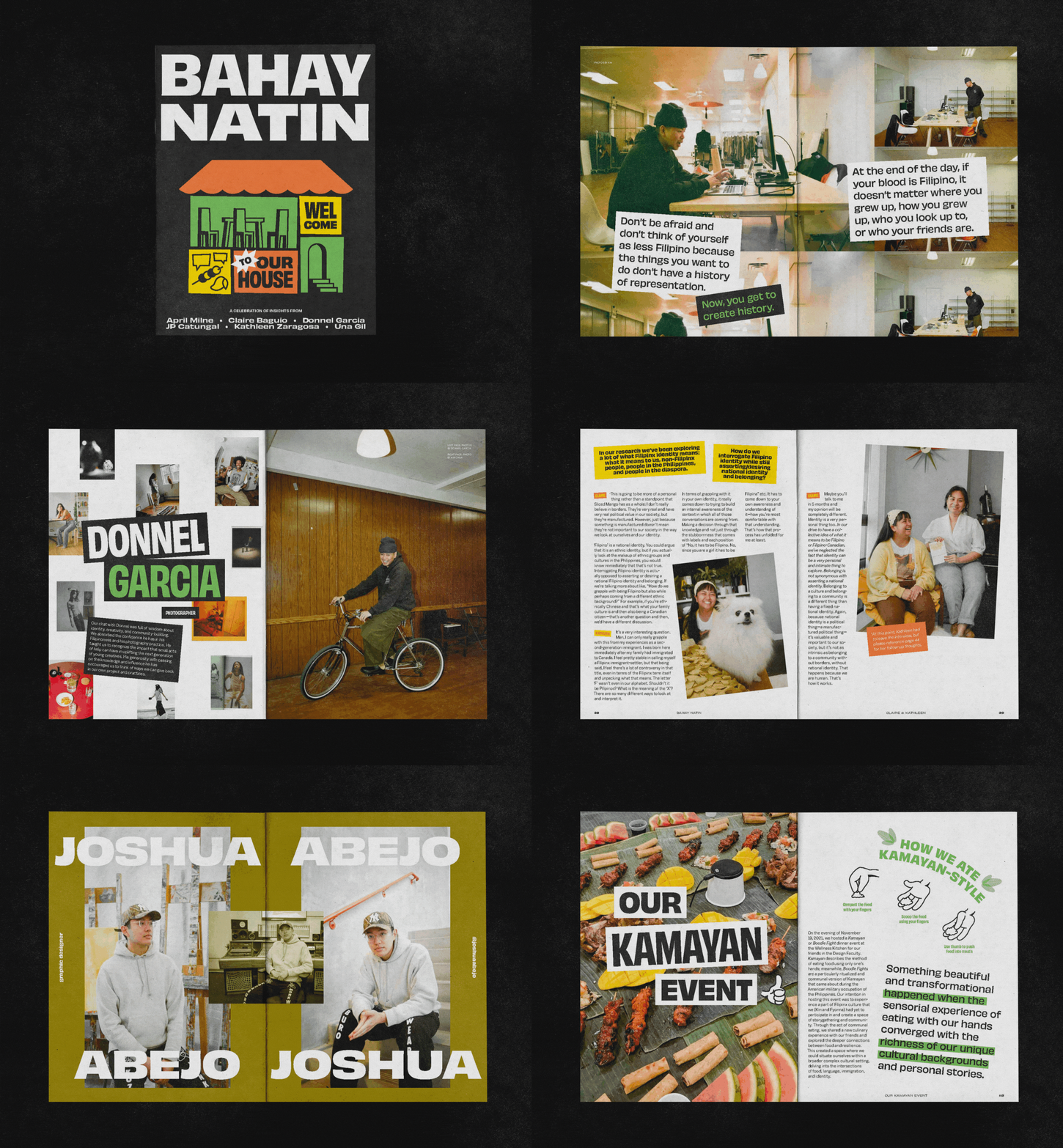
To reflect our appreciation, the Bahay Natin publication shares the relationships and insights we gained throughout the project. It includes transcribed interviews and portrait photography of each interviewee, with each interview representing a metaphorical room in Bahay Natin.
Gifting Stories and Traditions
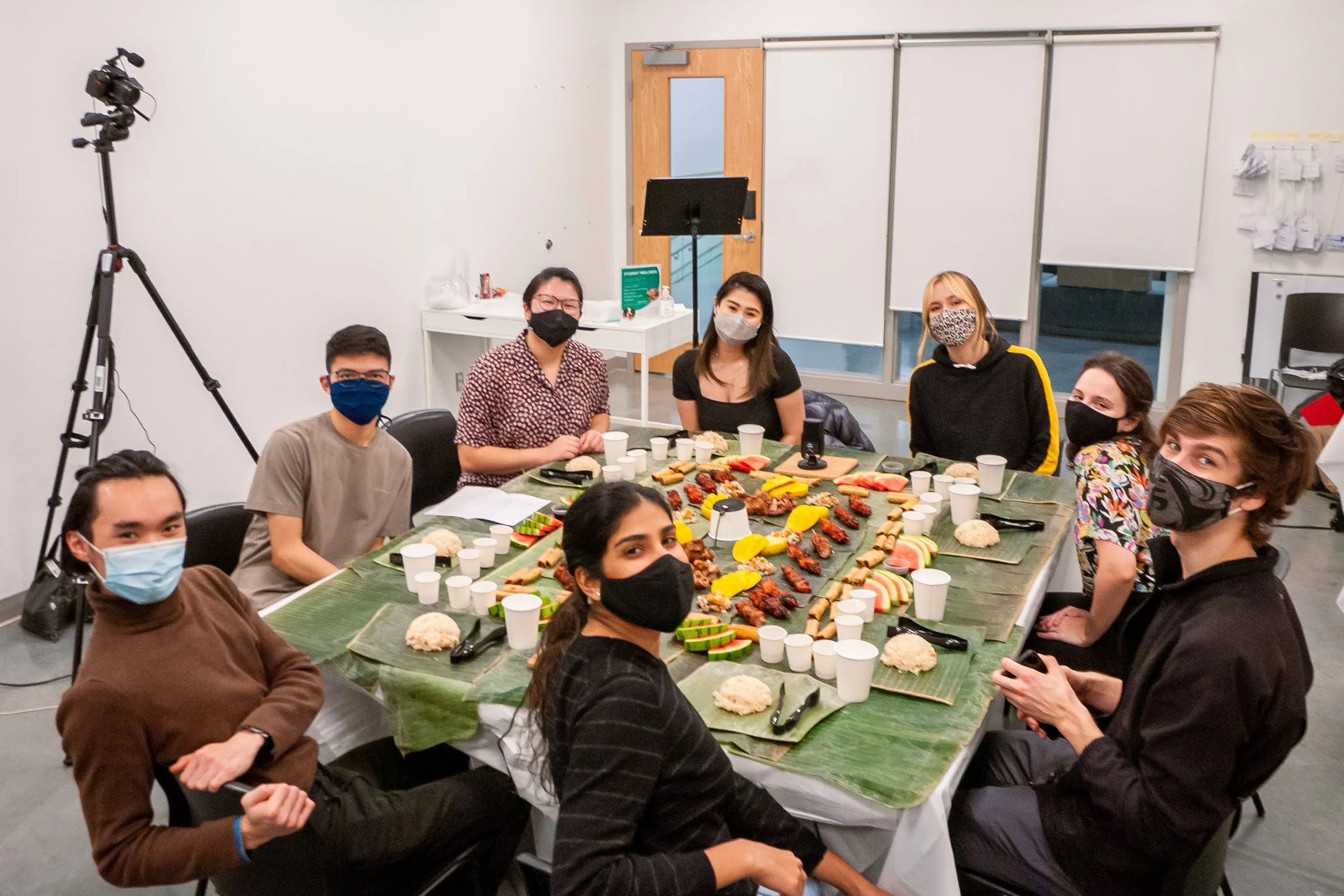
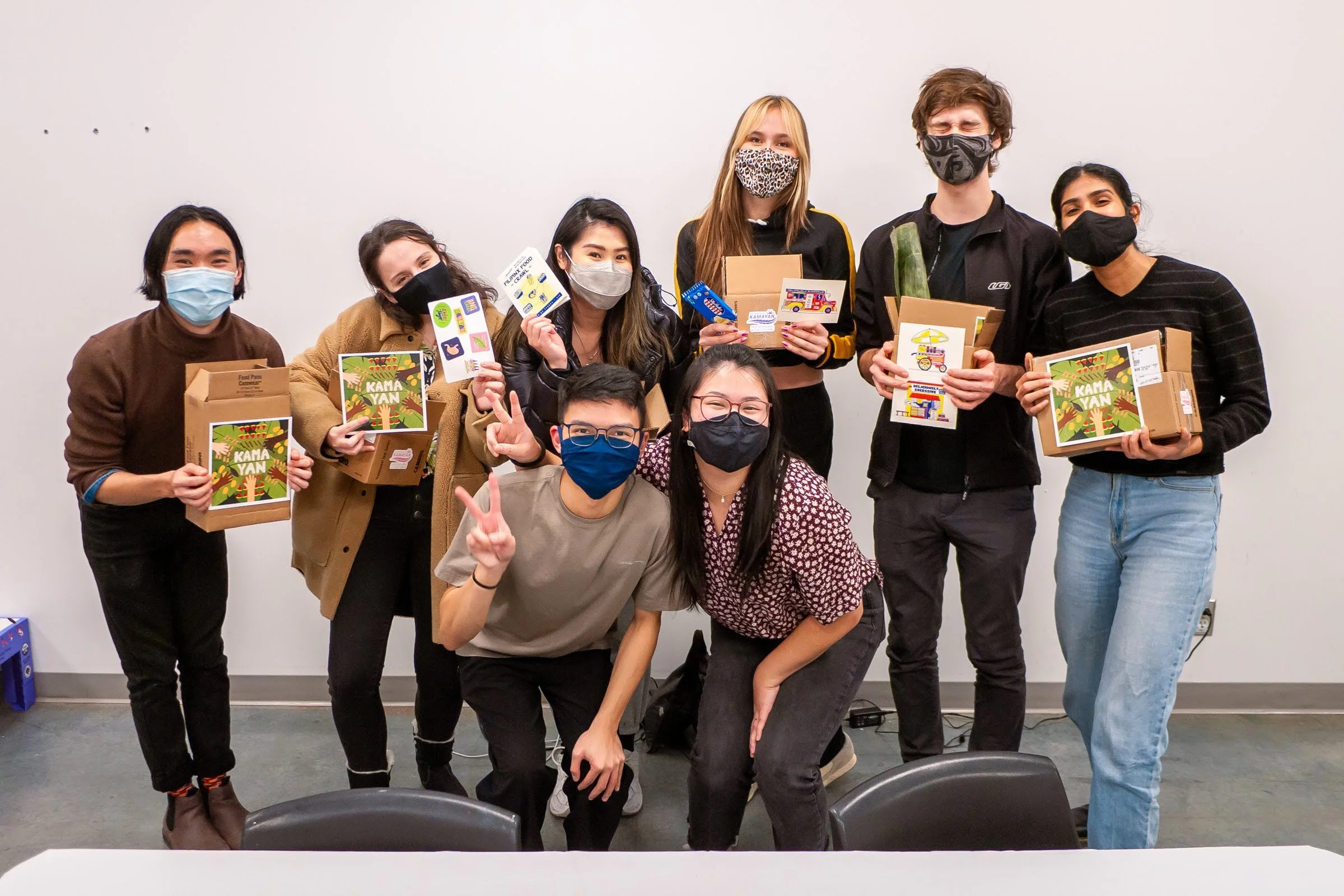
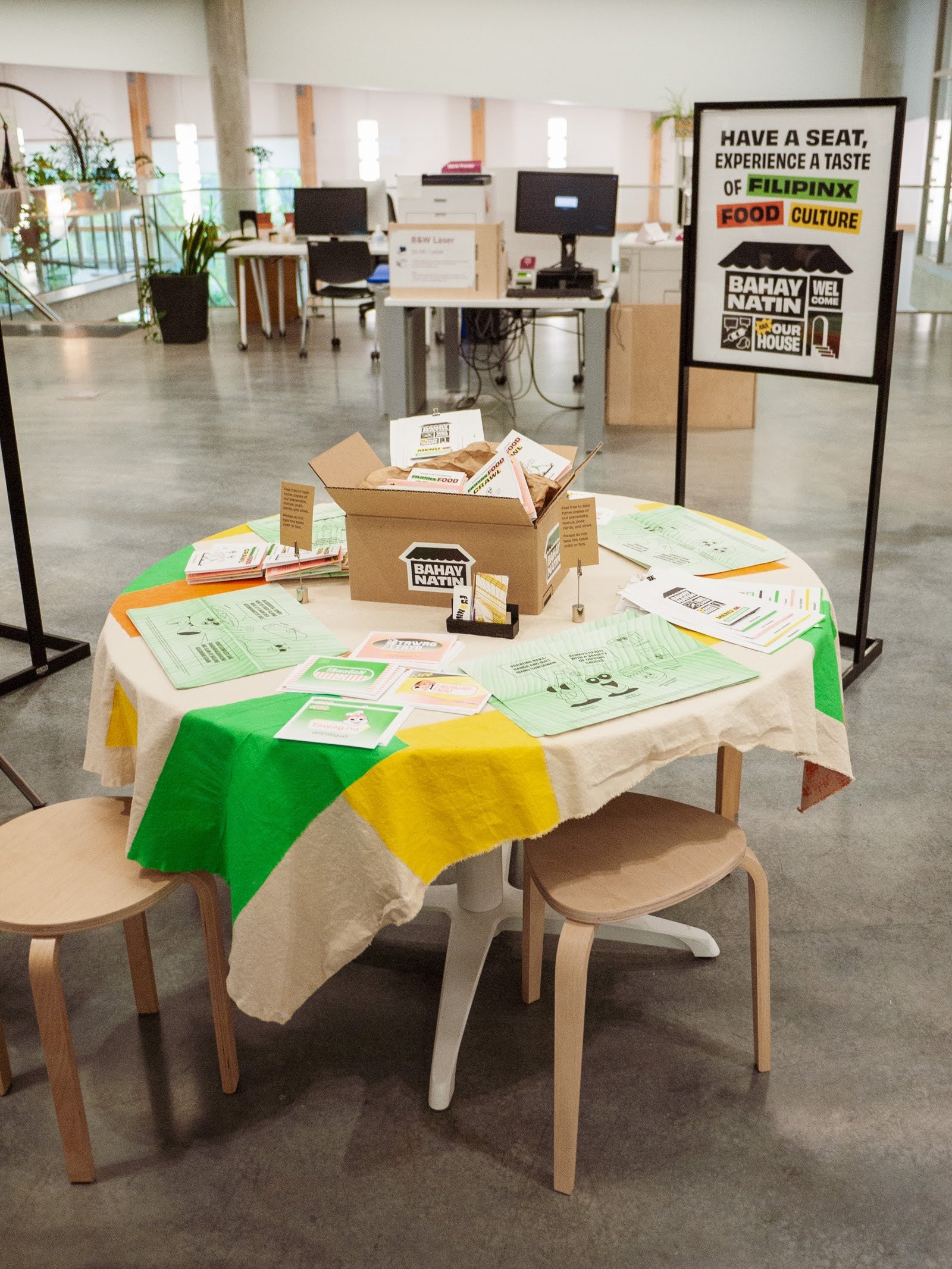
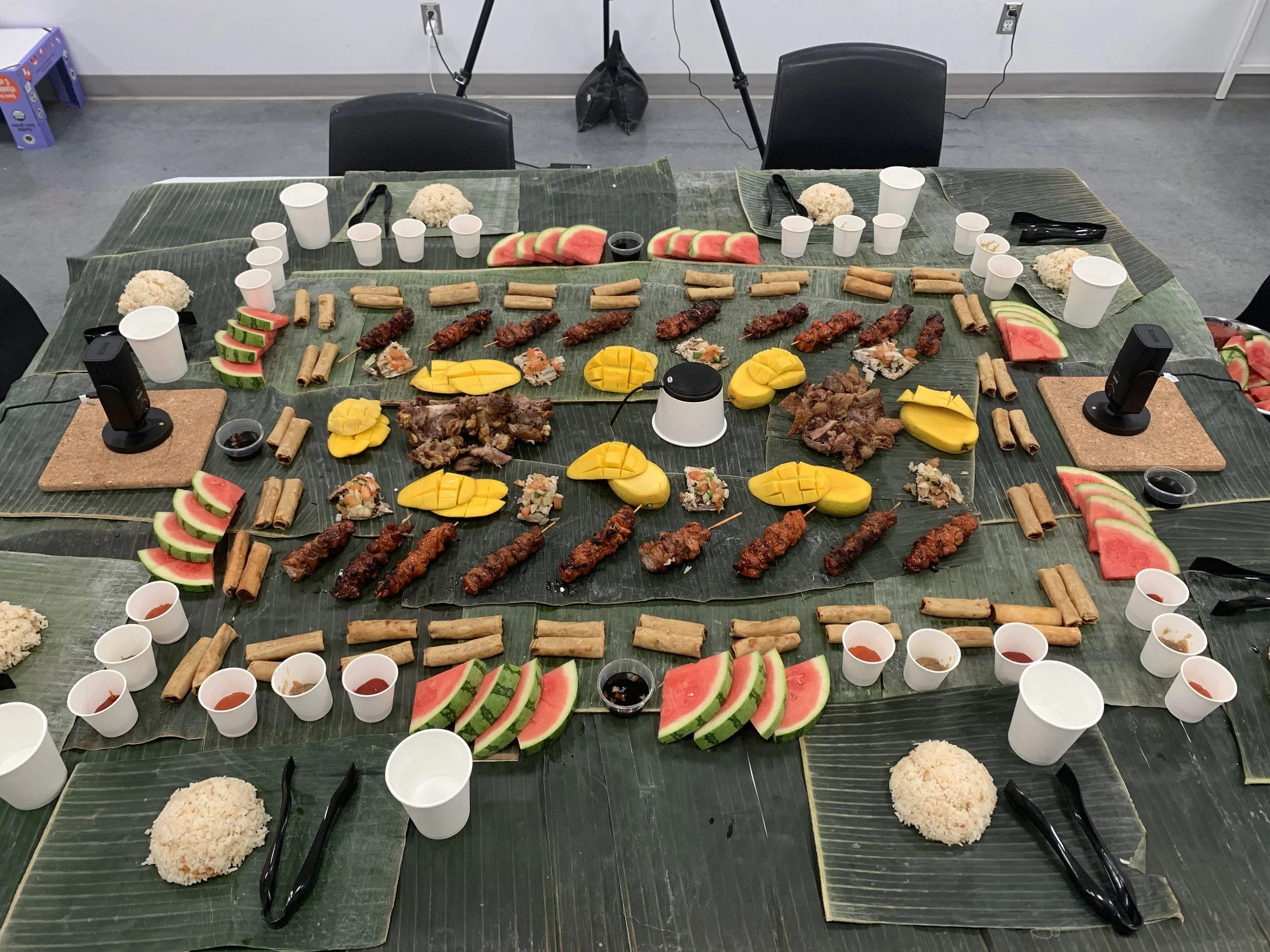
Inspired by our Kamayan event, the concept for our interactive print installation stemmed from the idea of a dining table filled with gifts. At the center of the display, we featured a box to hold all of our takeaways, symbolizing an artifact often used in the Filipinx diaspora to send gifts back home to loved ones.
Our intention was to create a space where audiences could situate themselves within a broader, complex cultural context, sparking conversations about the intersections of food, language, immigration, and identity.